

Introduction
A bra rarely feels uncomfortable for vague or mysterious reasons. The sensation usually develops gradually — a tightening around the ribs during the afternoon, a subtle shoulder fatigue after hours at a desk, or the persistent awareness of fabric against skin that was barely noticeable in the morning. These experiences reflect the interaction between anatomy, movement, and garment engineering.
Breast tissue has weight but limited structural support of its own. A bra exists to redistribute that load across stronger parts of the torso. When that redistribution becomes inefficient, the body signals the imbalance through discomfort. Understanding these signals requires looking at bras not as fashion items but as mechanical support systems interacting with a dynamic human body.
How a Bra Supports the Upper Body
A well-fitted bra stabilizes breast tissue by transferring gravitational force across the rib cage, shoulders, and sternum. This process relies on coordinated tension between the band, cups, and straps. When these components work together, pressure spreads evenly and remains below the body’s threshold for irritation.
When the system becomes misaligned, certain regions bear more force than they are designed to tolerate. This concentration may be perceived as tightness, soreness, or instability depending on where the imbalance occurs.
Featured snippet
What is the main cause of bra discomfort?
The most common cause of bra discomfort is uneven distribution of breast weight due to incorrect band tension, cup shape mismatch, or strap overloading.
Rib Cage Mechanics and Band Pressure
The band anchors the entire support structure. It should stabilize breast weight while allowing natural expansion of the rib cage during breathing. When tension is excessive, intercostal muscles and surrounding soft tissue may experience sustained compression. This can produce a sensation often described as suffocation or deep pressure.
When the band is too loose, support shifts upward. The shoulders compensate, and muscular fatigue may develop. Comfort is therefore less about softness and more about achieving equilibrium between horizontal stability and respiratory freedom.
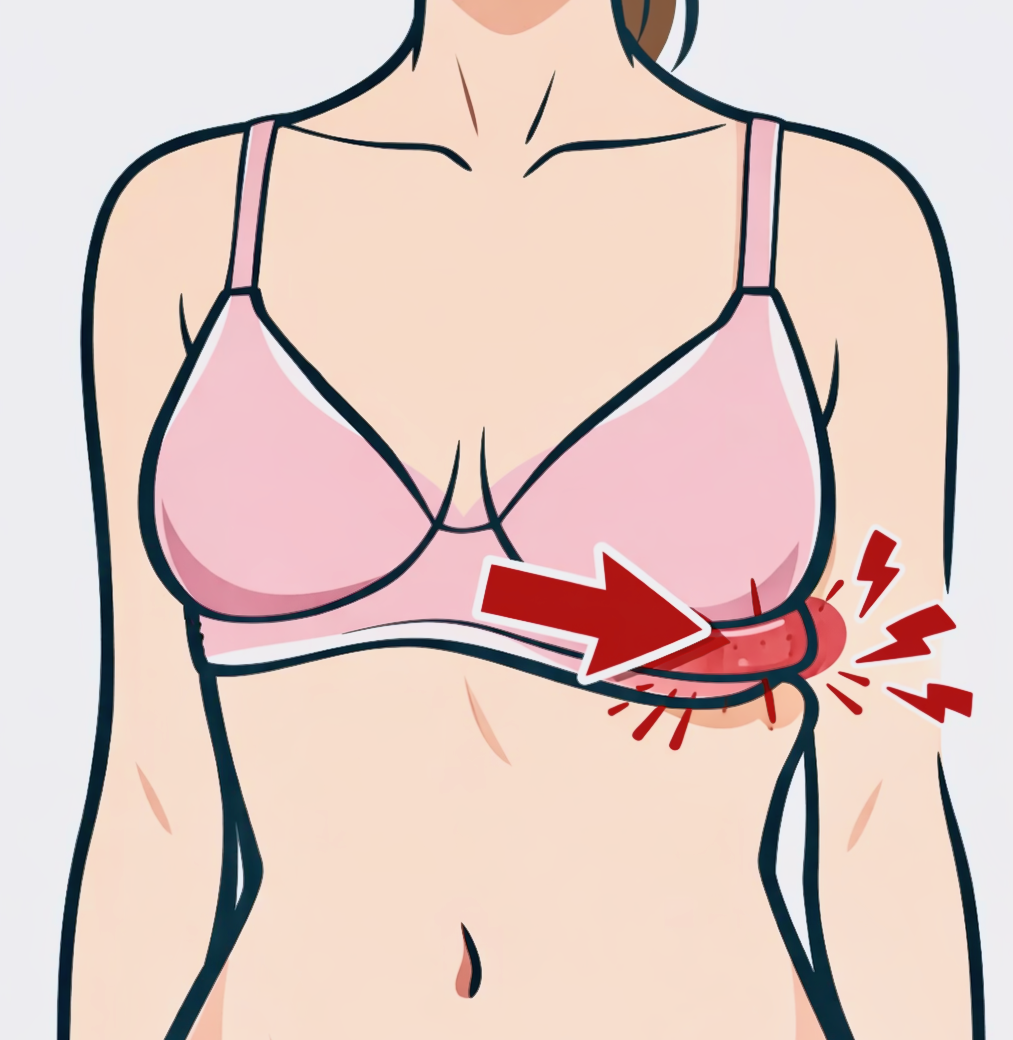
For a visual diagnosis of band issues, compare this with the common bra fit problems guide.
Breast Shape, Tissue Behavior, and Cup Geometry
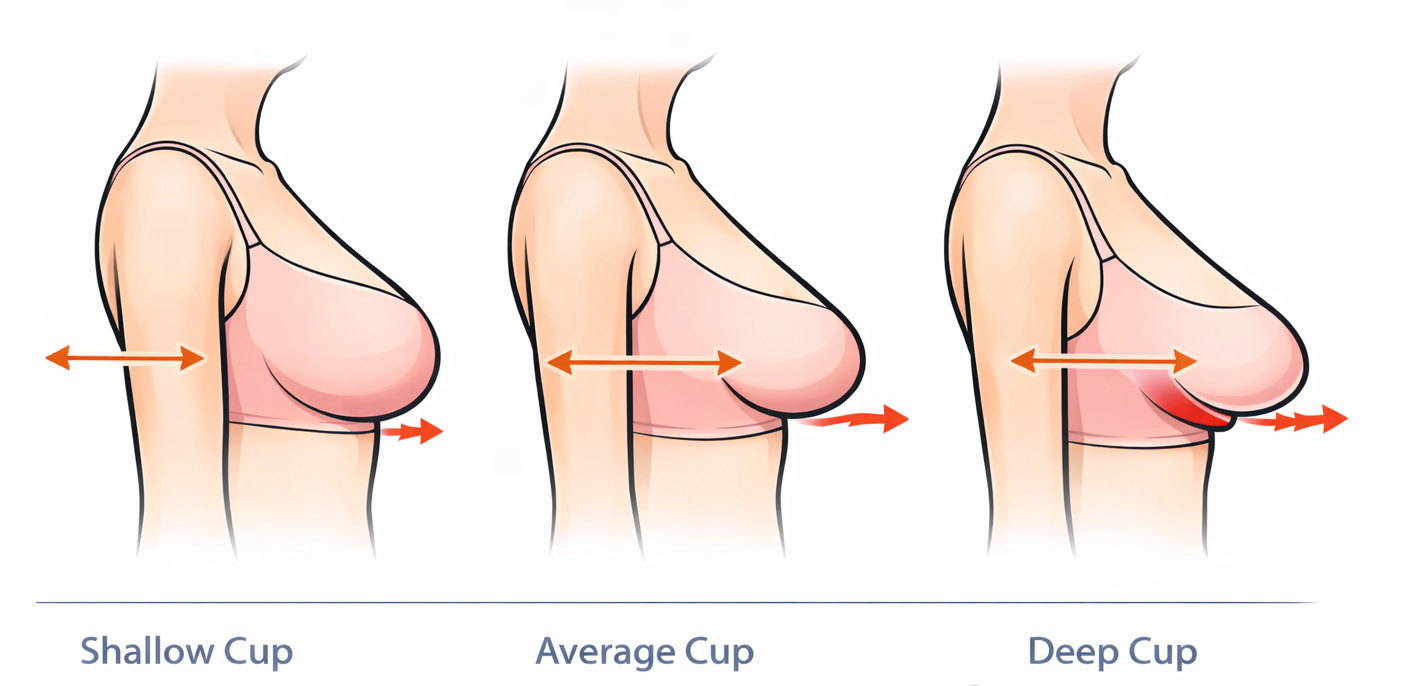
Breast morphology varies widely in projection, root width, and fullness distribution. Standardized cup designs cannot perfectly accommodate this variability. When cup geometry conflicts with anatomy, pressure becomes localized rather than distributed.
Projected tissue compressed within shallow cups may experience discomfort at its apex, while wider roots confined in narrow cups may be forced inward. These mechanical mismatches are often interpreted as sensitivity when they are in fact structural conflicts.
Featured snippet
Why do bra cups feel uncomfortable?
Bra cups feel uncomfortable when their shape does not match breast projection, width, or fullness distribution, causing uneven pressure.
If cup shape feels like the problem, read why breast shape matters more than size.
Underwire Alignment and Structural Stability
Underwire provides perimeter support and maintains cup shape under load. When aligned with the natural fold beneath the breast, it distributes force into the band without contacting sensitive tissue. Problems arise when curvature or width is incompatible with anatomy.
A wire that shifts toward the underarm or presses against glandular tissue can create focal pressure that intensifies throughout the day. This phenomenon reflects structural mismatch rather than inherent discomfort associated with underwire design.
For wire-specific troubleshooting, use the underwire pain guide.
Shoulder Load and Postural Influence
Straps stabilize movement but are not intended to carry primary load. When band support is insufficient, straps compensate by transferring vertical force to the shoulders. This can create muscular tension in the trapezius and cervical region.
Posture further influences this dynamic. Forward-leaning positions common during desk work alter strap angles and increase perceived pressure. Over time, this may contribute to fatigue that feels unrelated to the bra itself.
Featured snippet
Should bra straps carry weight?
Bra straps should stabilize movement, not carry most of the breast weight. Excessive strap pressure indicates poor band support.
Strap pressure is one of the fit signals covered in the common bra fit problems checklist.
Fabric Interaction and Skin Microclimate
Comfort also depends on how materials interact with skin. Fabrics that retain moisture or create friction can disrupt the skin’s microenvironment, particularly in areas of repetitive movement. Irritation may develop gradually and be mistaken for fit problems.
Seam placement, fiber composition, and ventilation all influence this interaction. Breathable textiles and smooth surface construction can reduce micro-trauma during extended wear.
When the discomfort is mainly wire pressure rather than fabric friction, start with the underwire hurting article.
Why Bras Feel Worse Later in the Day
Many individuals notice that discomfort intensifies with time rather than appearing immediately. This reflects physiological changes such as fluid redistribution, muscular fatigue, and subtle tissue swelling. As the body adapts to sustained load, pressure perception increases.
Additionally, elastic materials gradually lose tension during wear, altering how force is distributed. The combined effect explains why a bra may feel acceptable in the morning yet restrictive by evening.
Featured snippet
Why does my bra hurt more at night?
Bra discomfort often increases later in the day due to muscle fatigue, fluid changes, and reduced elasticity in the garment.
If fit seems to change during the day, recheck the signs in how to know if a bra fits perfectly.
Structural Aging of Bras and Support Loss
Over time, elastic textiles experience mechanical fatigue. Recovery strength diminishes, wires shift position, and cup stability declines. These changes subtly alter load distribution and may lead to increased reliance on straps or localized pressure points.
Recognizing when structural integrity has declined helps prevent unnecessary discomfort.
Before replacing every bra, compare symptoms against the fit problem guide to separate sizing issues from worn-out structure.
When Discomfort Reflects a Deeper Issue
Persistent symptoms such as nerve-like pain, chronic shoulder tension, or skin inflammation may indicate conditions beyond fit alone. In such cases, consultation with a professional bra fitter or healthcare provider can help identify musculoskeletal or dermatological factors.
This perspective aligns bra fitting with broader considerations of physical well-being rather than viewing discomfort solely as a clothing concern.
Establishing a Reliable Fit Baseline
Measurement tools provide an objective starting point for selecting supportive garments. A bra size calculator can help align initial size selection with anatomical dimensions, reducing the likelihood of uneven load distribution.
Refinement then occurs through observing how the bra behaves during movement, extended wear, and changes in posture.
Key Insight
Key Insight
Bra discomfort typically reflects mechanical imbalance rather than personal tolerance. By understanding how pressure, tissue behavior, and garment structure interact, it becomes possible to make targeted adjustments that improve comfort outcomes.
Citation
- Why Bras Feel Uncomfortable. A Biomechanical Explanation of Fit, Pressure, and Breast Support.


