

Detailed Bra Size Measurement Guide
This bra size measurement guide explains how to measure bra size at home, how to use band and bust measurements, and what to check after you get a calculator result.
How to Measure Band Size
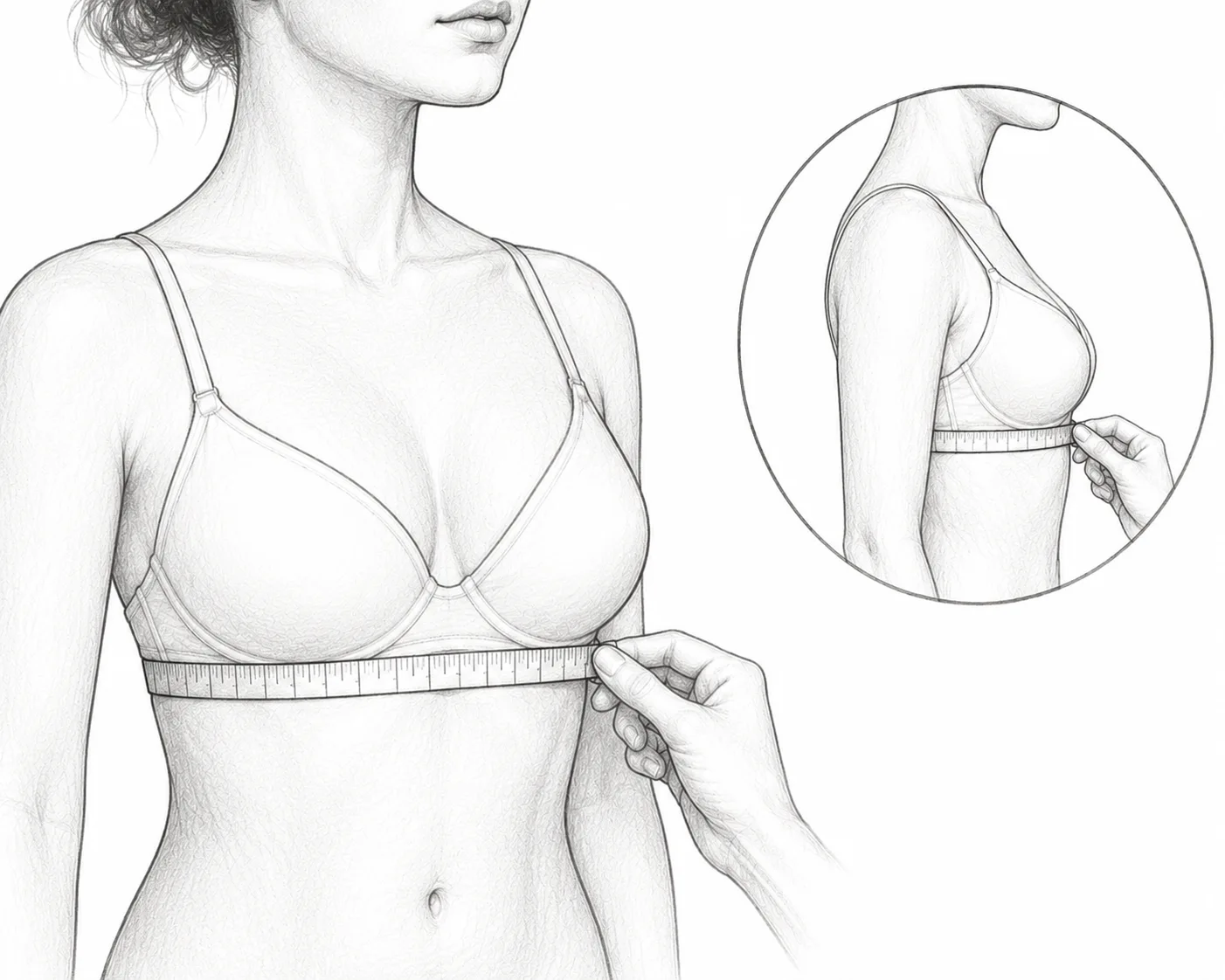
Your band size starts with the underbust measurement. Wrap a soft measuring tape around your ribcage directly under your bust, where the bottom of a bra band normally sits. Keep the tape level across your back and snug against your body without digging in. This number tells the calculator how much support your ribcage can provide through the bra band.
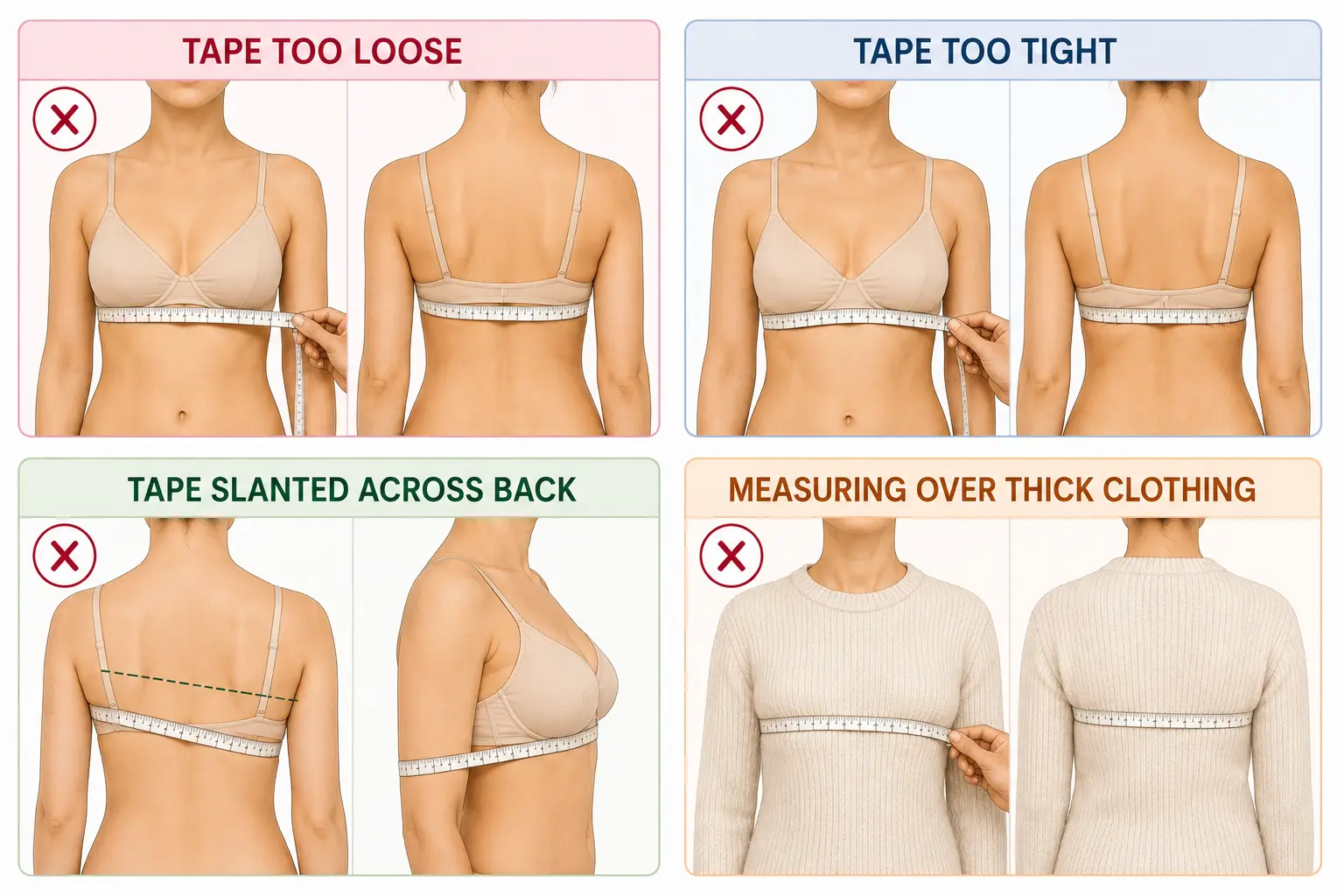
If you are learning how to measure band size for the first time, take the measurement in front of a mirror or ask someone to check that the tape is straight across your back. A tilted tape can add or remove measurement, which can lead to a band that feels too loose or too tight.
How to Measure Bust Size
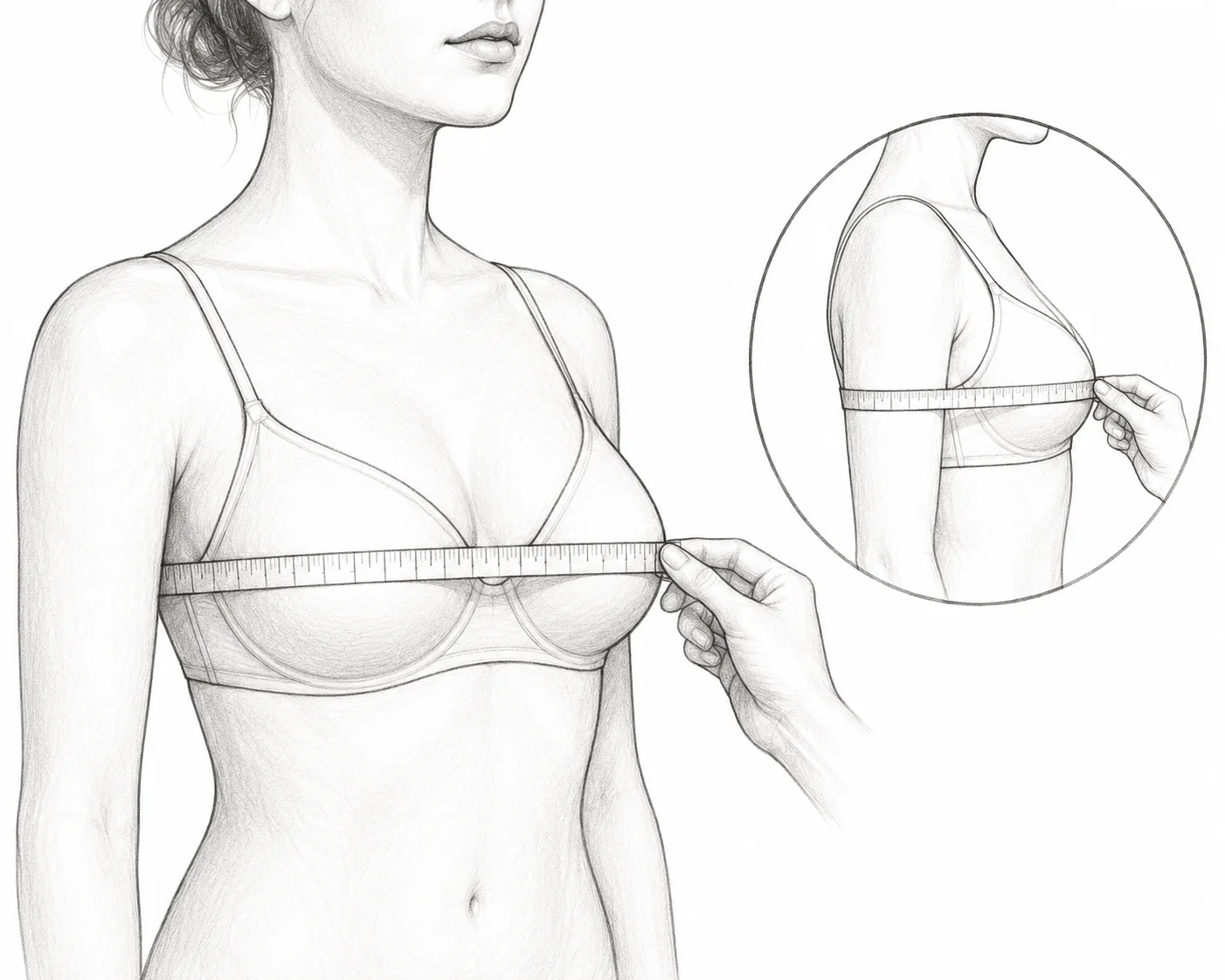
Your bust measurement is taken around the fullest part of your bust. This is sometimes called the overbust measurement. Keep the tape level, relaxed, and flat against your body. It should touch the bust without squeezing breast tissue or hanging loose.
When you measure bust size, stand naturally and breathe normally. Do not pull your shoulders back too hard or push your chest forward. The goal is to capture your natural bust measurement so the cup size estimate is more realistic.
How to Calculate Cup Size
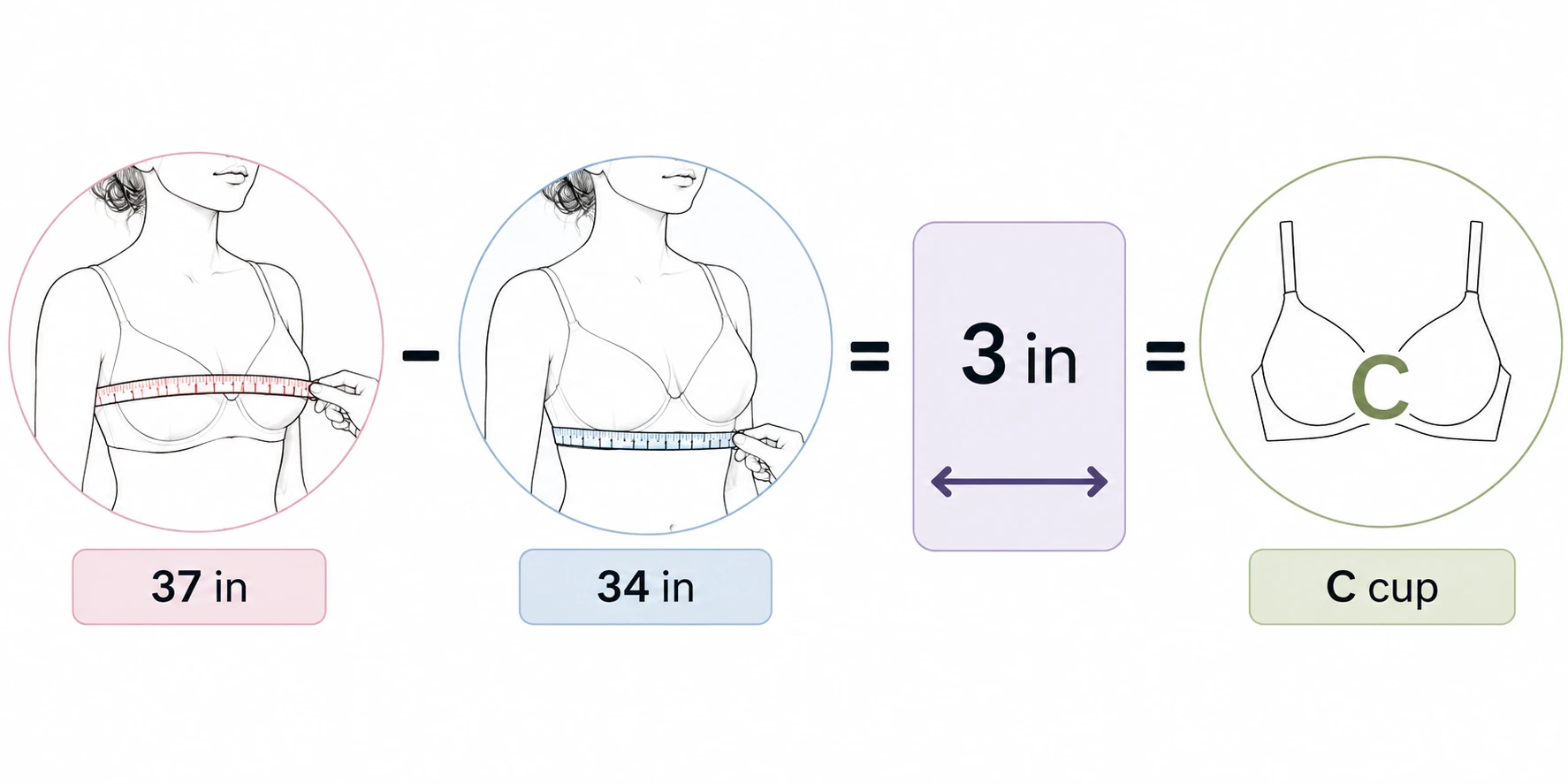
Cup size is based on the difference between your bust measurement and your band measurement. This is why the same cup letter can look different on different band sizes. A 34C and a 38C are both C cups, but they do not have the same cup volume because cup volume changes with band size.
To estimate cup size, subtract your band measurement from your bust measurement. This is often described as the bust minus band cup size method. For example, if your bust measurement is 37 inches and your band measurement is 34 inches, the difference is 3 inches, which commonly points to a C cup in US sizing.
Common US cup size estimate by inch difference
| Bust minus band difference | Estimated cup size |
|---|---|
| 1 inch | A cup |
| 2 inches | B cup |
| 3 inches | C cup |
| 4 inches | D cup |
| 5 inches | DD or E cup |
| 6 inches | DDD, F, or regional equivalent |
Should You Round Up or Down?
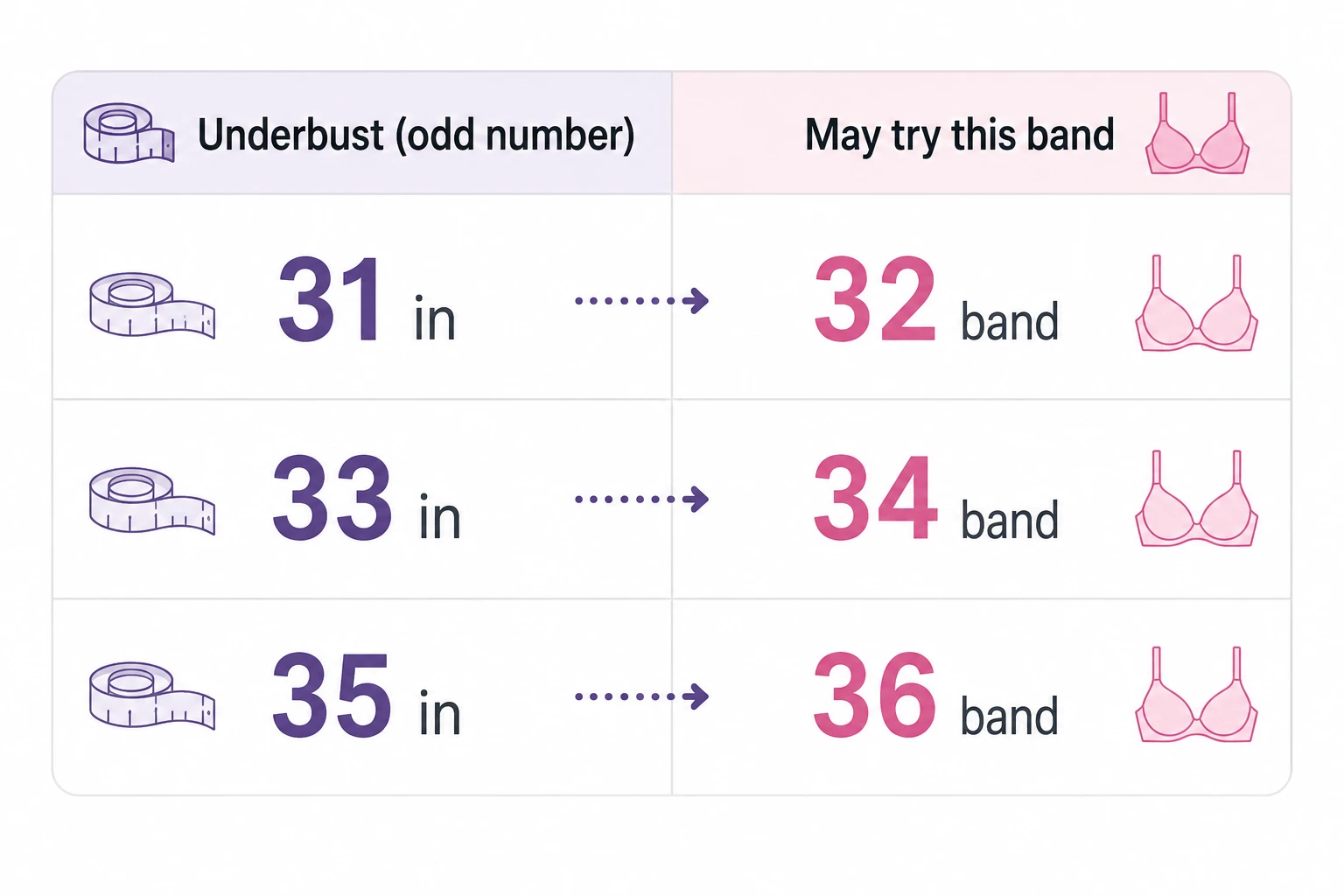
Rounding depends on the sizing method and region, but for many US bra size calculator measurements, the band is commonly rounded to a nearby even number. For example, a snug underbust measurement of 33 inches may point toward a 34 band, while 35 inches may point toward a 36 band. The bust measurement is usually kept closer to the actual number before comparing the difference.
Do not automatically round every number upward. If the tape is loose, rounding up can create a band that is too large. If the tape is pulled too tight, rounding down can create a band that feels restrictive. Measure snugly first, then let the calculator or size chart handle the estimate.
What If Your Band Measurement Is Odd?
Odd band measurements are common. If your underbust measurement is an odd number, the best band size may depend on how snugly you measured and how firm you prefer the band. Someone measuring 33 inches may try a 34 band first, but if the band rides up or feels loose, a 32 sister size may also be worth comparing.
Treat the number as a starting point, not a final rule. Bra fabrics, elastic strength, brand grading, and personal comfort can all affect which band feels best.
Inches vs Centimeters
You can measure bra size in inches or centimeters, but use the same unit for both underbust and bust. Do not measure the band in inches and the bust in centimeters. Mixing units will break the calculation and produce the wrong result.
Inches are commonly used for US and UK sizing calculations, while centimeters are often used for EU and international size charts. If you measure in centimeters, use a calculator or chart that supports centimeters instead of manually guessing the conversion.
Measuring With a Bra vs Without a Bra
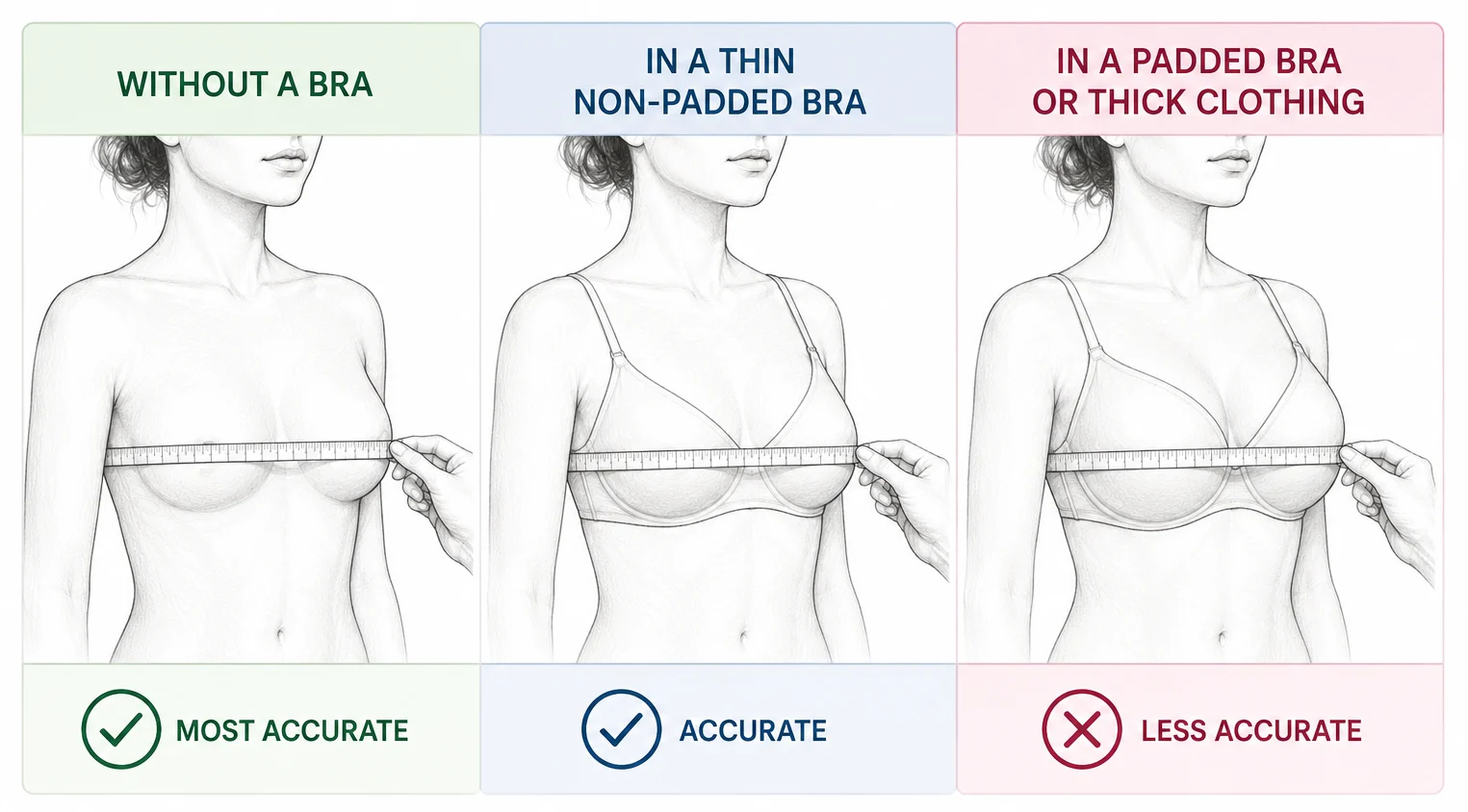
The most accurate way to measure bra size without a bra is to measure directly against the body, especially for the underbust. For the bust measurement, some people get a more stable result by wearing a thin, non-padded bra that does not compress or lift the bust too much.
Avoid measuring in a push-up bra, sports bra, heavily padded bra, or thick clothing. These can change the overbust measurement and make the cup size estimate less accurate. If you must measure over clothing, use thin fitted fabric and understand that the result may be less precise.
Common Measuring Mistakes
The most common mistakes are holding the tape too loose, pulling it too tight, letting it slope across the back, measuring over bulky clothing, or confusing bust measurement with cup size. Bust measurement is a body measurement. Cup size is calculated from the difference between bust and band.
Another common mistake is using your current bra size as your band measurement. Your current bra may be stretched out, sized differently by brand, or simply the wrong fit. Always measure your body instead of copying the size printed on an old bra tag.
Why Your Calculator Result May Differ From Your Current Bra
Your calculator result may be different from the bra size you currently wear because bras stretch over time, brands use slightly different sizing, and many people unknowingly wear a band that is too large and a cup that is too small. A calculator gives an estimated starting size, not a guaranteed final fit.
This difference does not mean the calculator is wrong. It means the result should be tested with real fit checks: the band should stay level, the cups should contain the bust without spilling or gaping, the center gore should sit close to the chest when the bra style allows it, and the straps should not carry most of the weight.
What to Do After You Get a Bra Size
After you know your bra size, use it as your first try-on size. Then check the fit in a real bra. Raise your arms, sit down, bend slightly, and move around. If the band rides up, try a smaller band. If the cups spill, try a larger cup. If the cups gap, check both cup size and bra shape.
This is how to know your bra size more confidently: measure, use a calculator or chart, then confirm with fit signs. Bra size is a useful starting point, but the best fit also depends on breast shape, bra style, fabric, wire width, and brand.
When to Use a More Advanced Bra Size Calculator
A basic bra size calculator usually uses two measurements: underbust and bust. That works well as a simple starting point, but it cannot fully understand how breast tissue is shaped, projected, supported, or distributed on the body. Two people can have the same underbust and overbust measurements but need slightly different fit guidance because their breast shape and tissue distribution are different.
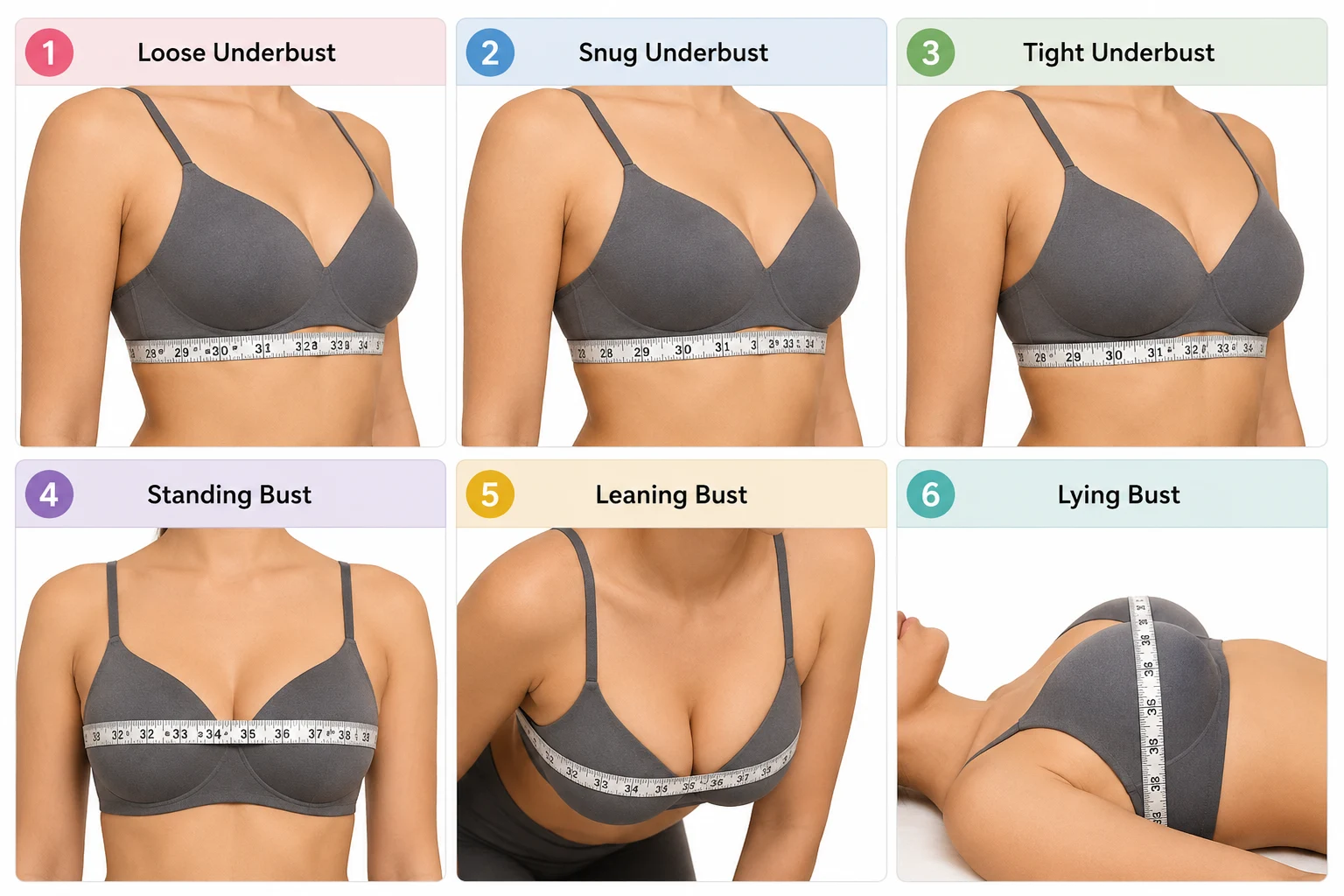
For a more detailed estimate, use the advanced bra size calculator when you want more than a quick band-and-cup result. The advanced calculator uses a 6-point measurement method instead of relying on only one underbust and one bust number. By comparing multiple measuring points, it can better account for projection, tissue firmness, tissue distribution, and how the bust changes across different measuring positions.
This is especially helpful if your usual bra size feels close but not quite right, if you are between sizes, if your cups gape or spill even after changing cup size, or if your current calculator result does not match how bras actually fit on your body.
Start with the simple method on this page if you want a fast bra size estimate. Use the advanced 6-point method when you want a more personalized fit analysis based on several bra size calculator measurements, including how your underbust and bust measurements behave across different positions.


